
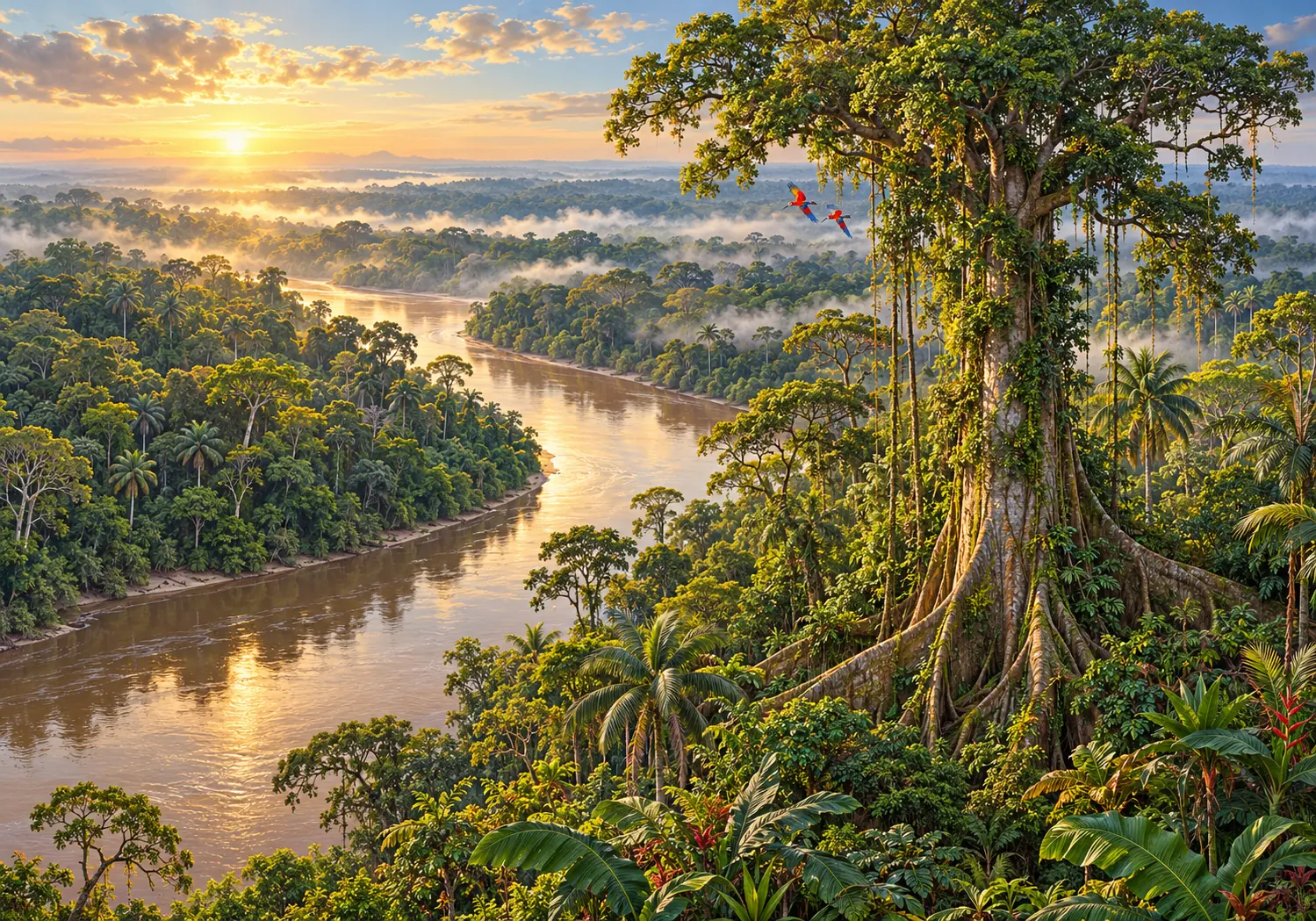
River into the forest
The Amazon rainforest surrounds a network of rivers. Trees, animals and water form connected habitats. This journey visits upland forest and nearby forest that floods during high water.
Enter this sceneExplore forest layers, hidden animals and river life.
Enter the Amazon rainforest, from the canopy to the roots and flooded forest. Discover animals, follow leafcutter ants underground and look beneath the river. These illustrations connect nearby habitats and different times of day.
The Amazon rainforest surrounds a network of rivers. Trees, animals and water form connected habitats. This journey visits upland forest and nearby forest that floods during high water.
Enter this sceneThe opened forest reveals the canopy, shaded understory, roots and nearby river. The colony and underwater views are enlarged to explain hidden habitats. Choose a discovery or follow the guided journey.
Interpretive ecological overview
The canopy is the leafy roof of the forest. Branches hold food and shelter for many animals. Sunlight reaches the crowns more easily than the forest floor.
A jaguar rests beside the roots. Its coat has dark rosettes, often with smaller spots inside. Jaguars use forests and riverside habitats across parts of the Americas.
Tunnels connect chambers inside the colony. Workers tend fungus gardens and care for young ants. This cutaway enlarges the small details so they are easier to see.
Amazon river dolphins can enter flooded forest during high water. A long snout and flexible neck help them move and find food. Their skin can be gray or pink.
The forest has overlapping layers. Tall trees rise above the canopy. Smaller trees grow below it, while roots spread through the soil. The layers are connected, not separate floors.
Enter this sceneThe canopy is the leafy roof of the forest. Branches hold food and shelter for many animals. Sunlight reaches the crowns more easily than the forest floor.
A three-toed sloth grips branches with curved claws. It spends much of its time in trees and eats leaves. Its coat can blend into the canopy.
Mosses, ferns and orchids grow on branches. These plants use the tree for support. Small animals find shelter among bark, roots and leaves.
Spider monkeys move through the canopy with long limbs and a gripping tail. Fruit is an important food. As monkeys travel, they can carry seeds to new places.
Macaws visit exposed clay banks. Clay licking may help them obtain minerals and cope with substances in their food. The birds also eat fruits, seeds and nuts.
Enter this sceneA three-toed sloth grips branches with curved claws. It spends much of its time in trees and eats leaves. Its coat can blend into the canopy.
Enter this sceneMosses, ferns and orchids grow on branches. These plants use the tree for support. Small animals find shelter among bark, roots and leaves.
Enter this sceneNatural hollows can shelter bats and other forest animals. These bats rest together inside a cavity. Most of the surrounding trunk remains solid wood.
Enter this sceneSpider monkeys move through the canopy with long limbs and a gripping tail. Fruit is an important food. As monkeys travel, they can carry seeds to new places.
Enter this sceneLeaves catch rain. Water drips from their tips and runs down branches and trunks. Other water reaches the forest floor through gaps in the canopy.
Enter this sceneWide buttress roots help support large trees. Roots also take up water and nutrients. Between them, small animals move through the leaf litter.
Leafcutter ants carry pieces of leaves back to their nest. They use this plant material to grow a fungus. The leaves are not simply their meal.
Leafcutter ants carry pieces of leaves back to their nest. They use this plant material to grow a fungus. The leaves are not simply their meal.
Enter this sceneTunnels connect chambers inside the colony. Workers tend fungus gardens and care for young ants. This cutaway enlarges the small details so they are easier to see.
Workers prepare plant material and tend the fungus growing on it. The fungus provides food for the colony. Tiny workers also care for the brood.
Workers prepare plant material and tend the fungus growing on it. The fungus provides food for the colony. Tiny workers also care for the brood.
Enter this sceneThis Amazonian poison frog lives among damp vegetation and leaf litter. Its bright pattern stands out in a close view. Observe wild frogs without touching them.
Enter this sceneFungi and small animals help break down dead wood. Nutrients return to the forest as it decays. Termites work inside this log, while a beetle rests on the bark.
Enter this sceneA jaguar rests beside the roots. Its coat has dark rosettes, often with smaller spots inside. Jaguars use forests and riverside habitats across parts of the Americas.
Enter this sceneDuring high water, rivers can spread into nearby floodplain forest. This is a seasonal change, not the result of one rain shower. Animals use the flooded habitat in different ways.
Enter this sceneSubmerged trunks and roots create an underwater habitat. Fish move among them. This illustration makes the water clearer so the hidden connections can be seen.
Illustrated underwater view
Amazon river dolphins can enter flooded forest during high water. A long snout and flexible neck help them move and find food. Their skin can be gray or pink.
Roots and fallen branches make many small spaces. Fish use these places for shelter and feeding. Visibility varies with water, sediment and light.
Amazon river dolphins can enter flooded forest during high water. A long snout and flexible neck help them move and find food. Their skin can be gray or pink.
Illustrated underwater view
Enter this sceneRoots and fallen branches make many small spaces. Fish use these places for shelter and feeding. Visibility varies with water, sediment and light.
Illustrated underwater view
Enter this sceneA green anaconda rests among roots and vegetation. Its eyes and nostrils sit high on its head. Its dark markings help it blend into the riverside habitat.
Enter this sceneAs daylight fades, some animals settle down and others become active. Bats fly through openings between the trees. The same branches now form a different scene.
Many tree frogs are active at night. Rounded toe pads help them hold onto branches and leaves. This close view uses gentle light to reveal the frog in its habitat.
Many tree frogs are active at night. Rounded toe pads help them hold onto branches and leaves. This close view uses gentle light to reveal the frog in its habitat.
Enter this sceneResearchers record animal sightings and habitat conditions. A notebook and binoculars help them observe from a boat. Wildlife is watched without being handled.
Enter this sceneCanopy, roots, soil and water support connected lives. Return to the overview to visit another habitat. Each close view belongs to this larger forest.
Enter this scene