All 11 parts, explained
1. Thrones and canopy
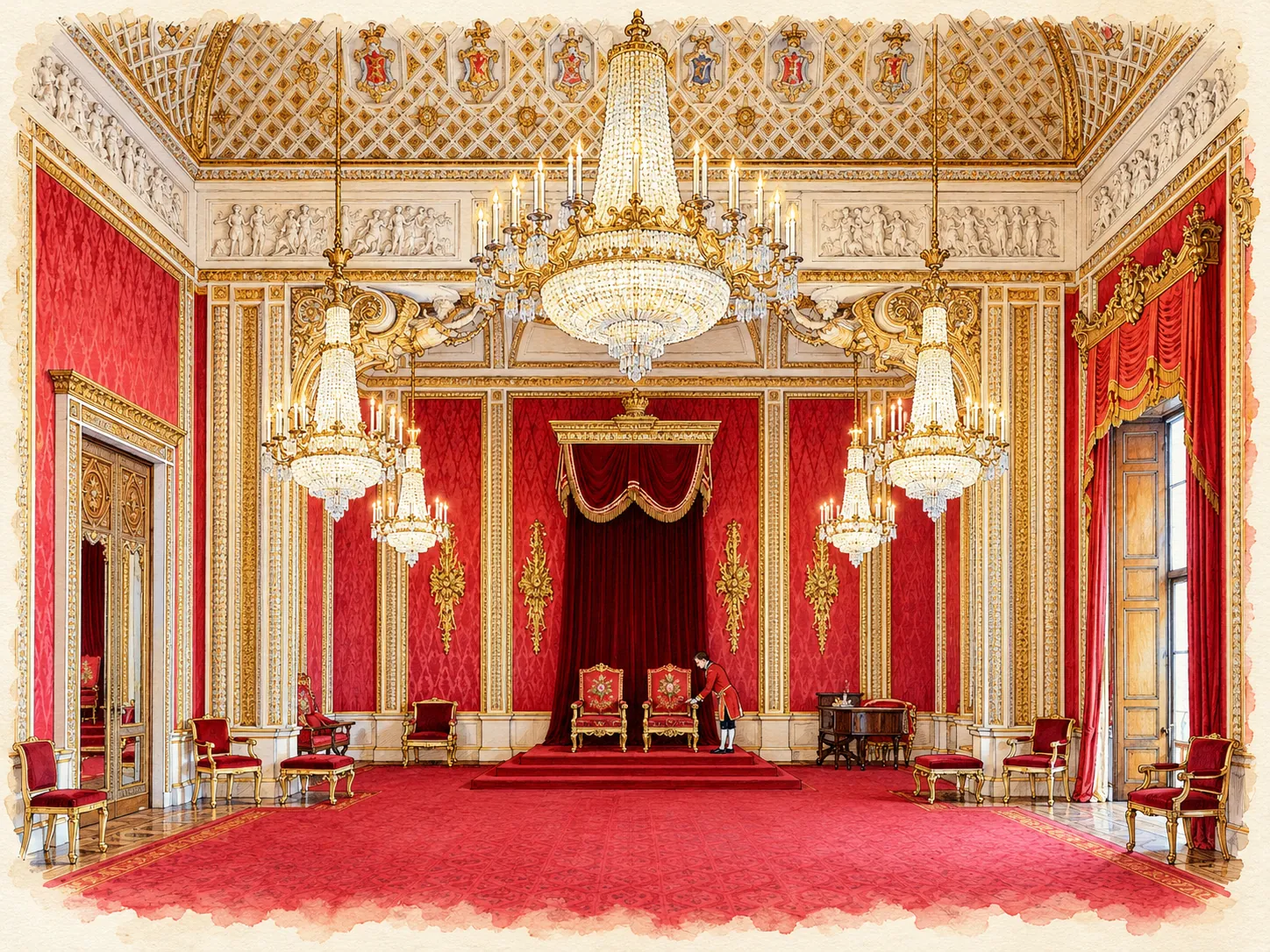
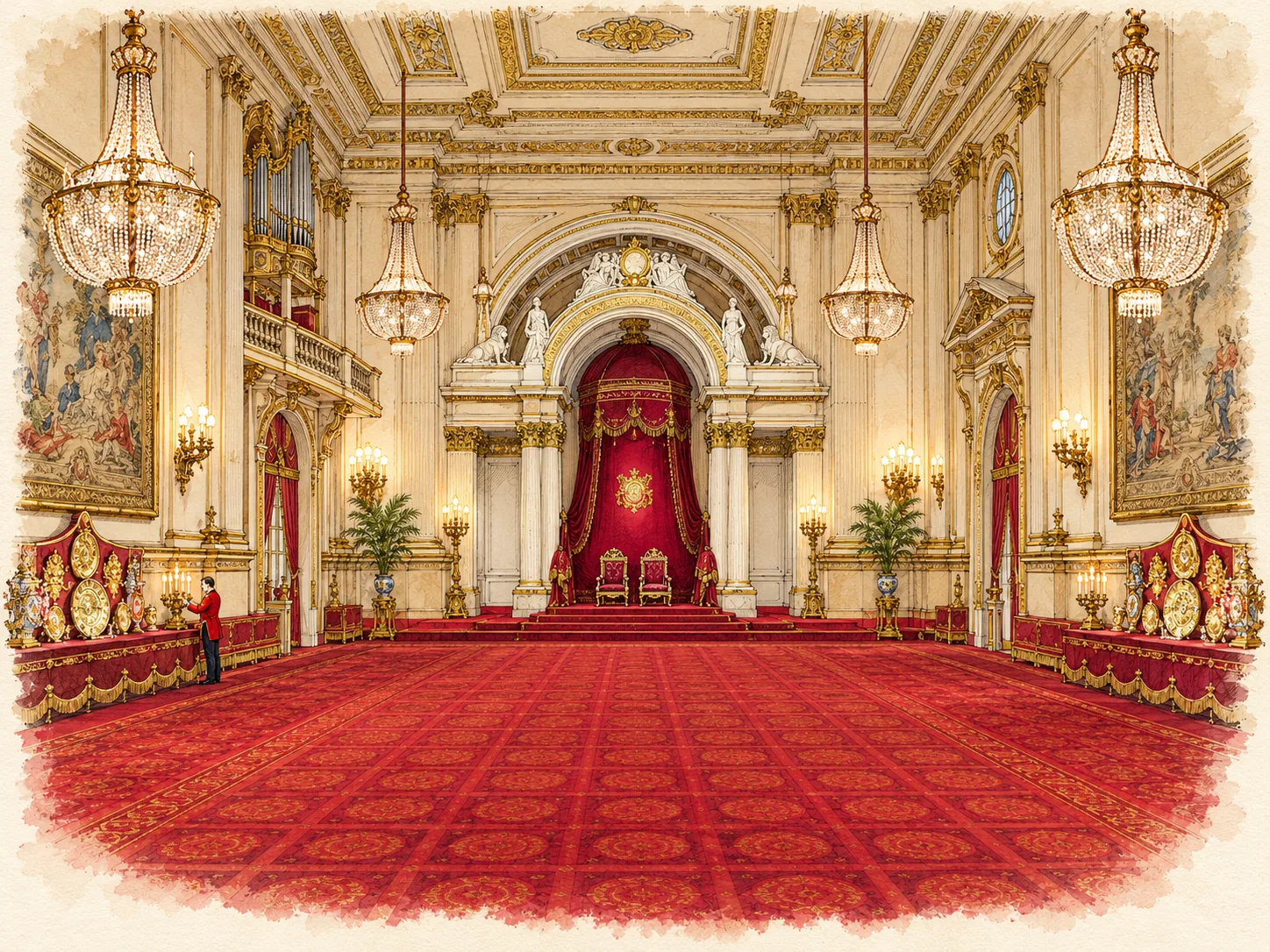
At one end of the Ballroom, two thrones stand under a red velvet canopy decorated with gold.
Fun fact Ceremonies where people receive honors from the monarch often take place here.
2. Organ
High up at the other end is a big pipe organ, behind a balcony where musicians can play.
Fun fact The Ballroom was built with a place for an orchestra from the start.
3. Chandeliers
Huge crystal chandeliers light up the room for evening banquets and concerts.
Fun fact The Ballroom is about 37 meters (120 feet) long and 18 meters (60 feet) wide.
4. Tapestries
Large woven pictures called tapestries hang on the walls, showing scenes full of people and landscapes.
Fun fact A tapestry is made by weaving colored threads on a loom, line by line.
5. Gold plate
Gilded dishes and platters are displayed along the walls during banquets, to make the room sparkle.
Fun fact Gold plates like these are for display and are almost never eaten from.
6. Setting up a banquet
Before a State Banquet, staff spend days setting up a huge horseshoe-shaped table for the guests.
Fun fact Staff use a ruler to measure each place setting, so every one is exactly the same.
7. Royal kitchen
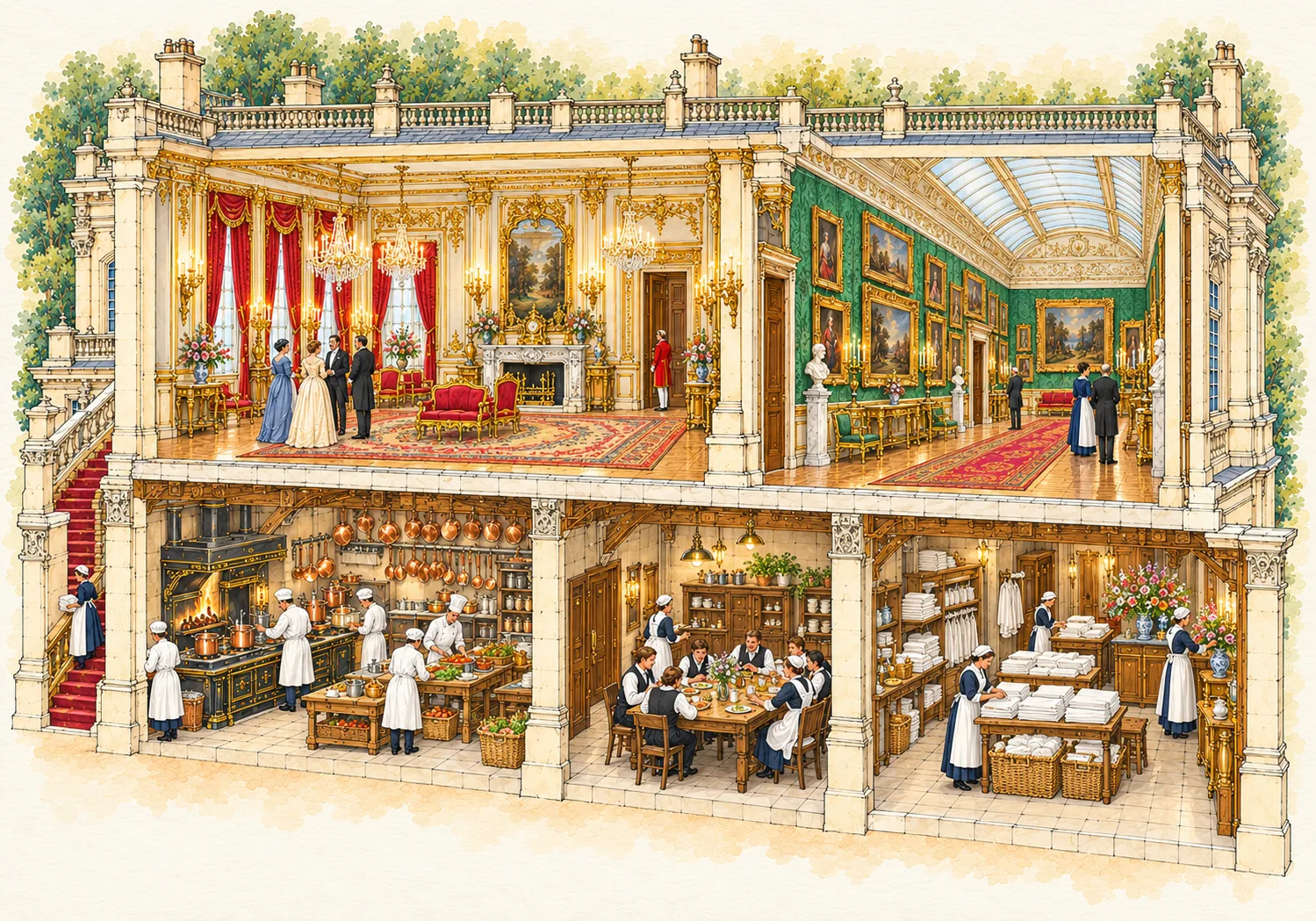
Downstairs, a team of chefs prepares the banquet in the Royal Kitchen, with copper pans and big stoves.
Fun fact Some of the copper pans in the palace kitchens are very old and still in use.
8. The chef
A chef carefully arranges the food on each plate, so that every guest gets the same perfect dish.
Fun fact A State Banquet usually has four courses.
9. Silver covers
Dishes travel from the kitchen under shiny silver covers that keep the food warm.
Fun fact A dome-shaped dish cover is called a cloche, which means bell in French.
10. The State Banquet
A State Banquet is a grand dinner to welcome the leader of another country on an official visit.
Fun fact Around 150 guests can sit at the banquet table in the Ballroom.
11. Behind the scenes
Doors at the side lead to the corridors and kitchens that staff use to serve the room.
Fun fact Staff often move through the palace by back corridors and stairs, out of sight.