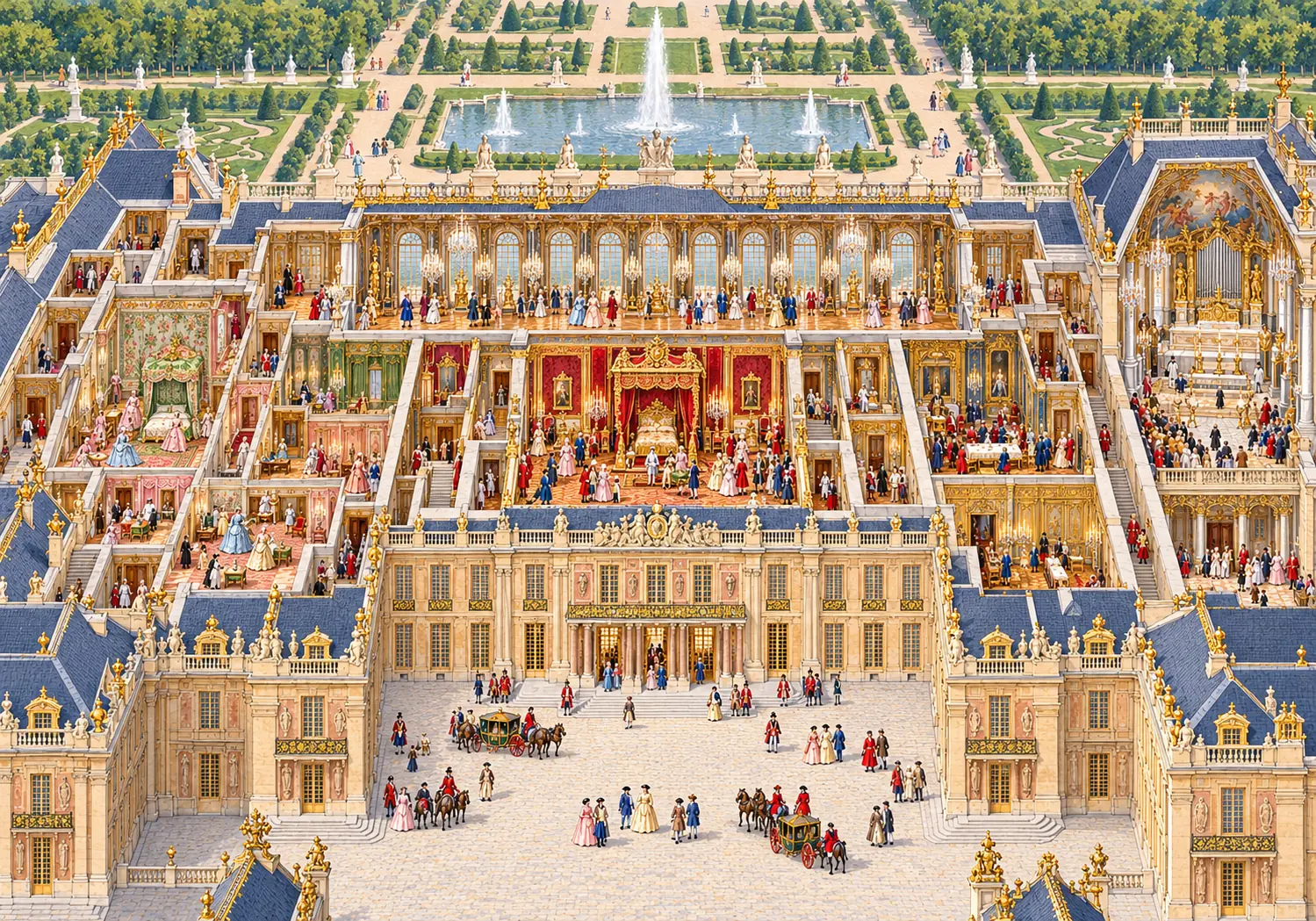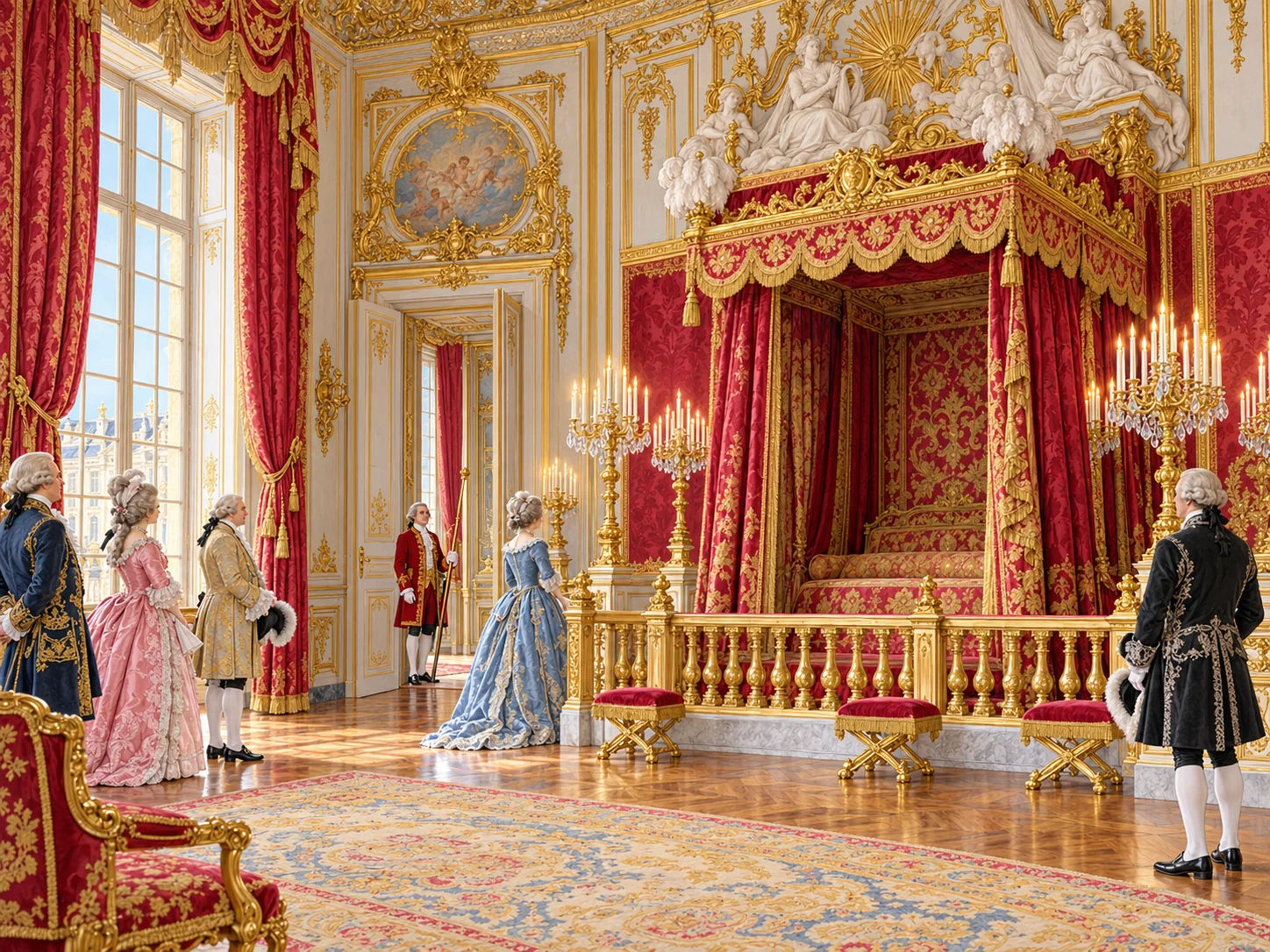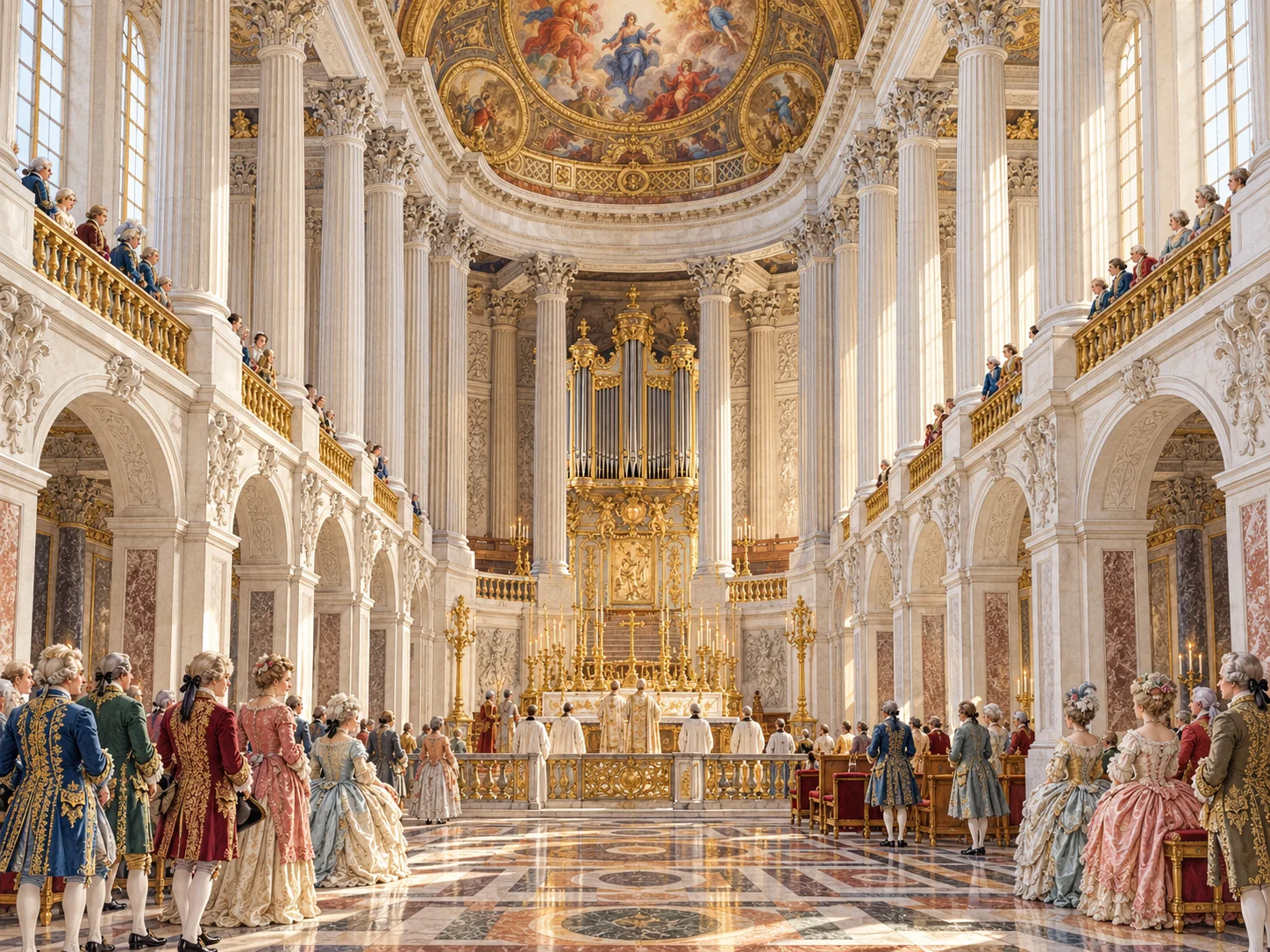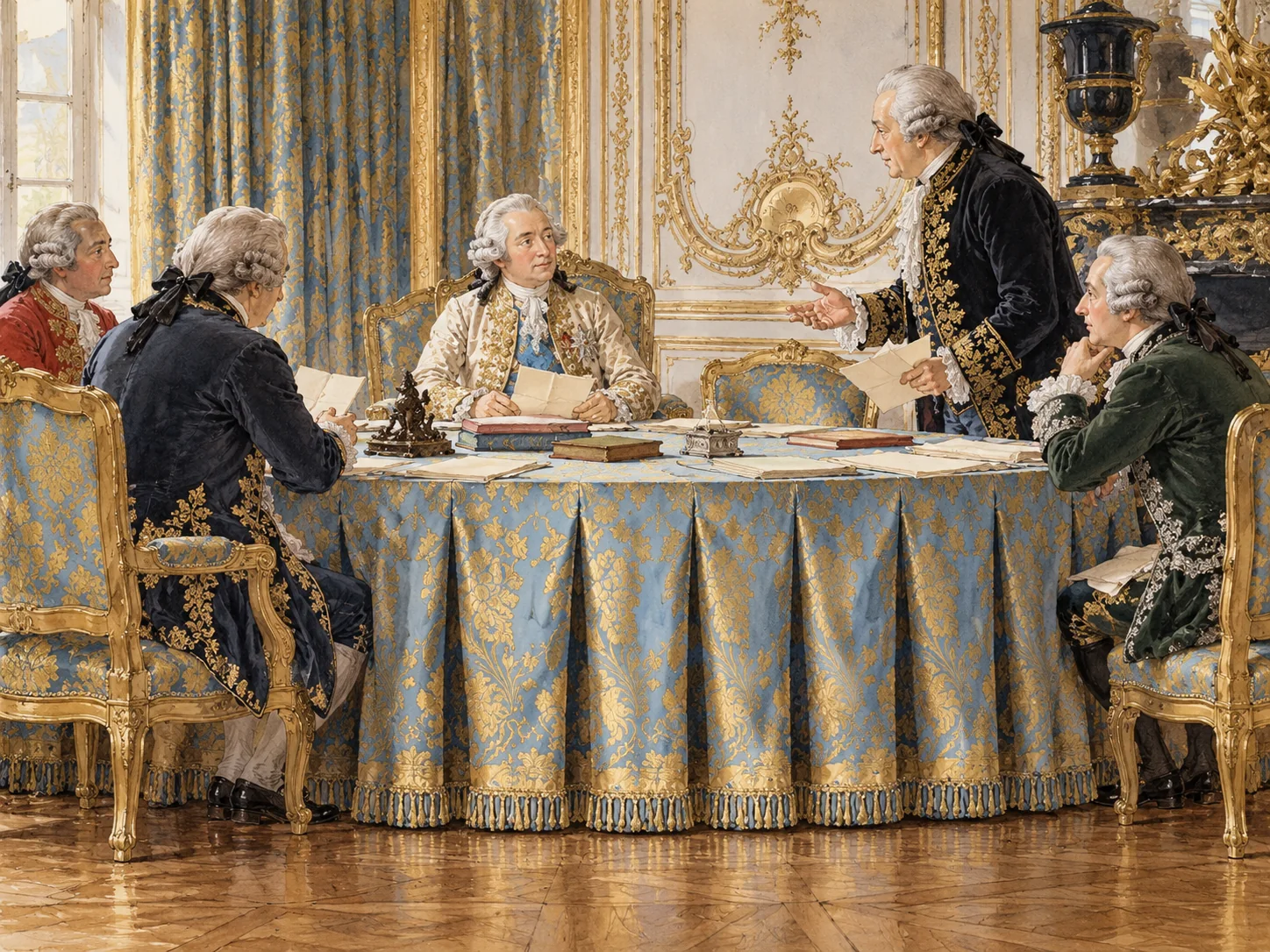
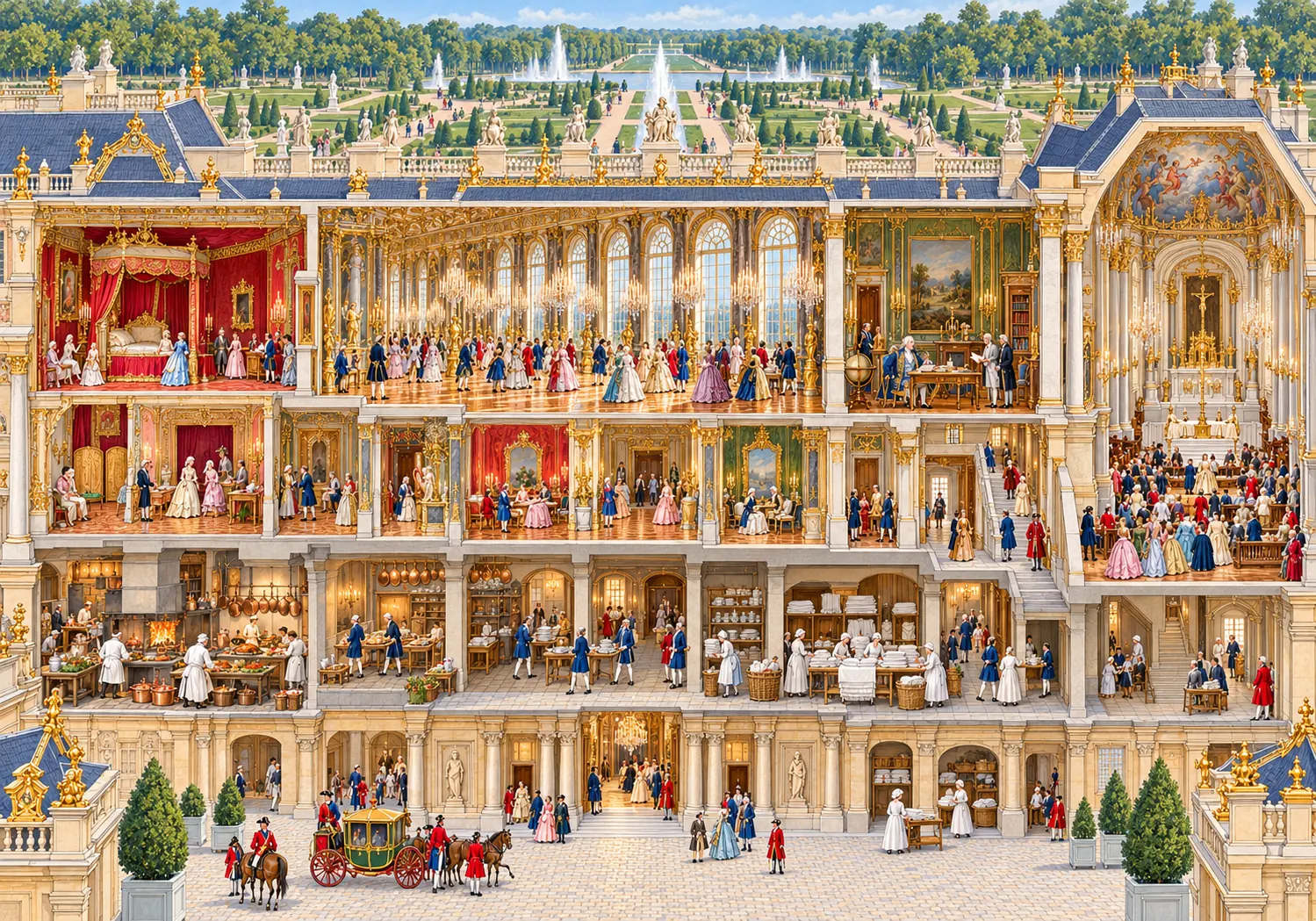
All 18 places and people, explained
1. Kitchens
Dozens of cooks, bakers and helpers worked in the palace kitchens. Meat roasted over big fires, and copper pots hung on the walls.
Fun fact The kitchens were far from the royal table, so the food often arrived only warm, not hot.
2. The cook
This cook is stirring a soup in a shiny copper pot. Cooks started work long before the royal family woke up.
Fun fact Copper pots heat up quickly and evenly, which is why cooks loved them.
3. Covered dishes
Servants carried the food to the table under silver covers, to keep it warm and clean on the long way.
Fun fact When the king's food passed by, courtiers bowed to it, as a sign of respect for the king.
4. Royal public meal
At the Grand Couvert, the king and queen ate their dinner in public, and visitors could come in to watch them eat.
Fun fact The king and queen sat side by side with their backs to the fireplace, and the queen sat on the king's left.
5. Royal food
A royal meal had many dishes: soups, roasts, vegetables, fruit and sweet tarts, served on fine porcelain and silver.
Fun fact Many royal plates were made at the royal porcelain factory of Sèvres, near Paris.
6. Pantry
Storerooms were filled with flour, bread, barrels and baskets, enough food for everyone who lived and worked at the palace.
Fun fact Hundreds of people who worked for the palace lived in a big building next to it, called the Grand Commun.
7. Servants' meal
The people who worked at the palace ate simpler meals together at long wooden tables: soup, bread, cheese and stew.
Fun fact Bread was the most important food for most people in France at that time.
8. Linen room
Sheets, tablecloths and clothes were kept here on tall shelves, folded neatly and ready to use.
Fun fact All the royal clothes and sheets were washed, ironed and mended by hand, without any machines.
9. Mending and folding
These servants are folding and mending linen. Every small tear was sewn up with a needle and thread.
Fun fact Irons were heated on a stove before use, because there was no electricity.
10. Queen's private rooms
In her small private rooms, Marie-Antoinette could rest, read and sew, away from the crowds of the court.
Fun fact These rooms were tucked behind the grand rooms and reached by little doors and corridors.
11. Music with friends
In the evening, the queen and her friends played music and talked. Marie-Antoinette played the harp.
Fun fact She had music lessons as a child in Austria and loved to sing.
12. King's library
Louis XVI's library was full of books about geography, history and science. He liked to read and study maps.
Fun fact The king was also good with his hands, and making locks was one of his hobbies.
13. King's private rooms
Behind the grand rooms were smaller, cozier rooms where the king could read, write and talk with a few people.
Fun fact These rooms were warmer and quieter than the huge state rooms.
14. Evening
In the evening, servants drew the curtains, lit the candles and got the rooms ready for the night.
Fun fact Many servants slept in small rooms nearby, so they could come quickly when they were called.
15. Gold decoration
Gilders covered carved wood with thin sheets of real gold, called gold leaf, to make frames and furniture shine.
Fun fact Gold leaf is so thin that it floats in the air and is picked up with a soft, wide brush.
16. Cabinetmaker
A cabinetmaker builds fine furniture. This one is fitting thin pieces of different woods together to make a picture.
Fun fact Making pictures from small pieces of wood is called marquetry.
17. Building a room
This cutaway shows how a palace room was built: stone walls and wooden floor beams, then paneling, paint and gold.
Fun fact Building and decorating Versailles took many years and thousands of workers.
18. The palace household
The palace household was everyone who served the royal family, from cooks and maids to guards and coachmen.
Fun fact Each job had its own name and rules, and many families served the palace for generations.