All 12 parts, explained
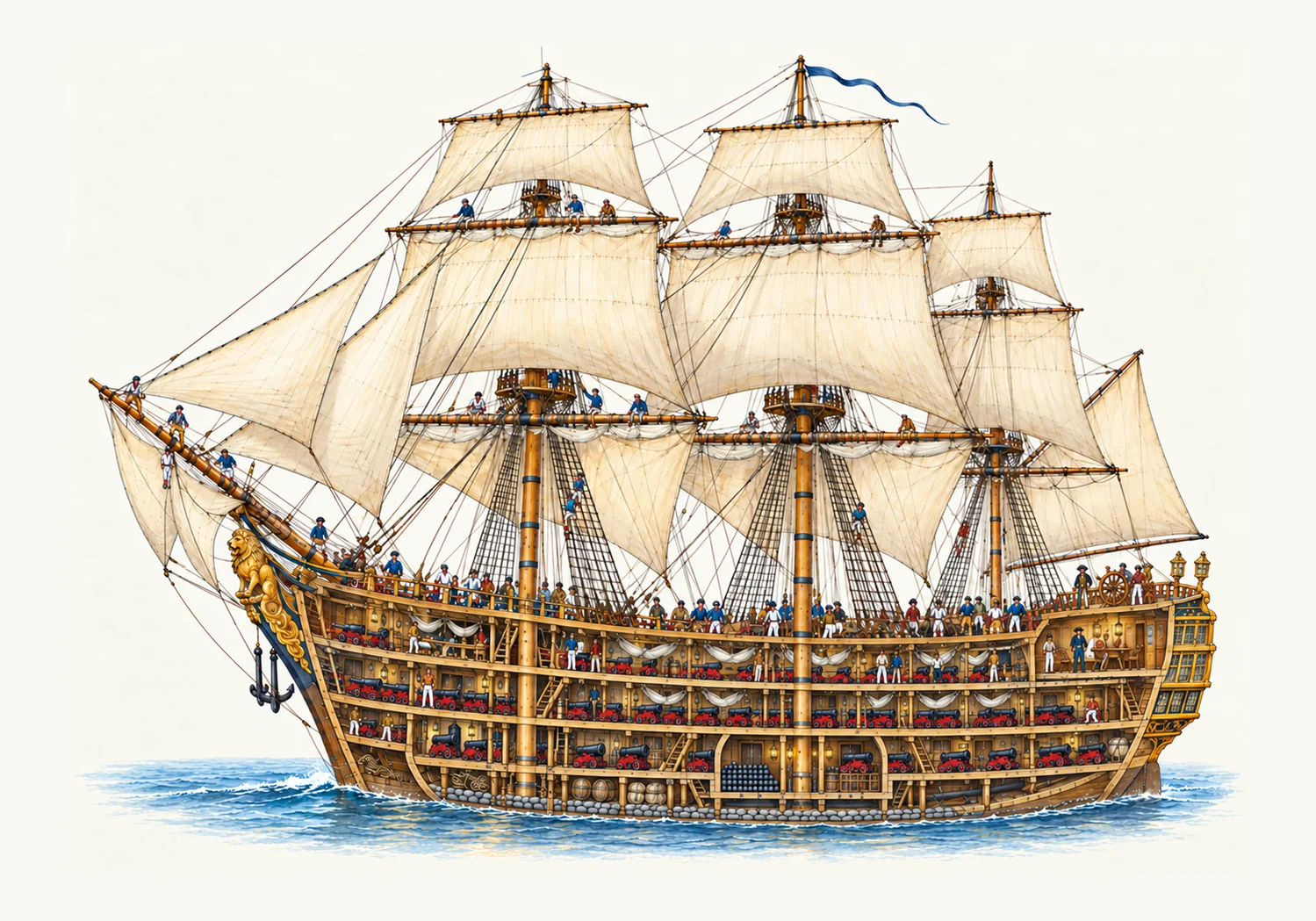
1. Sails
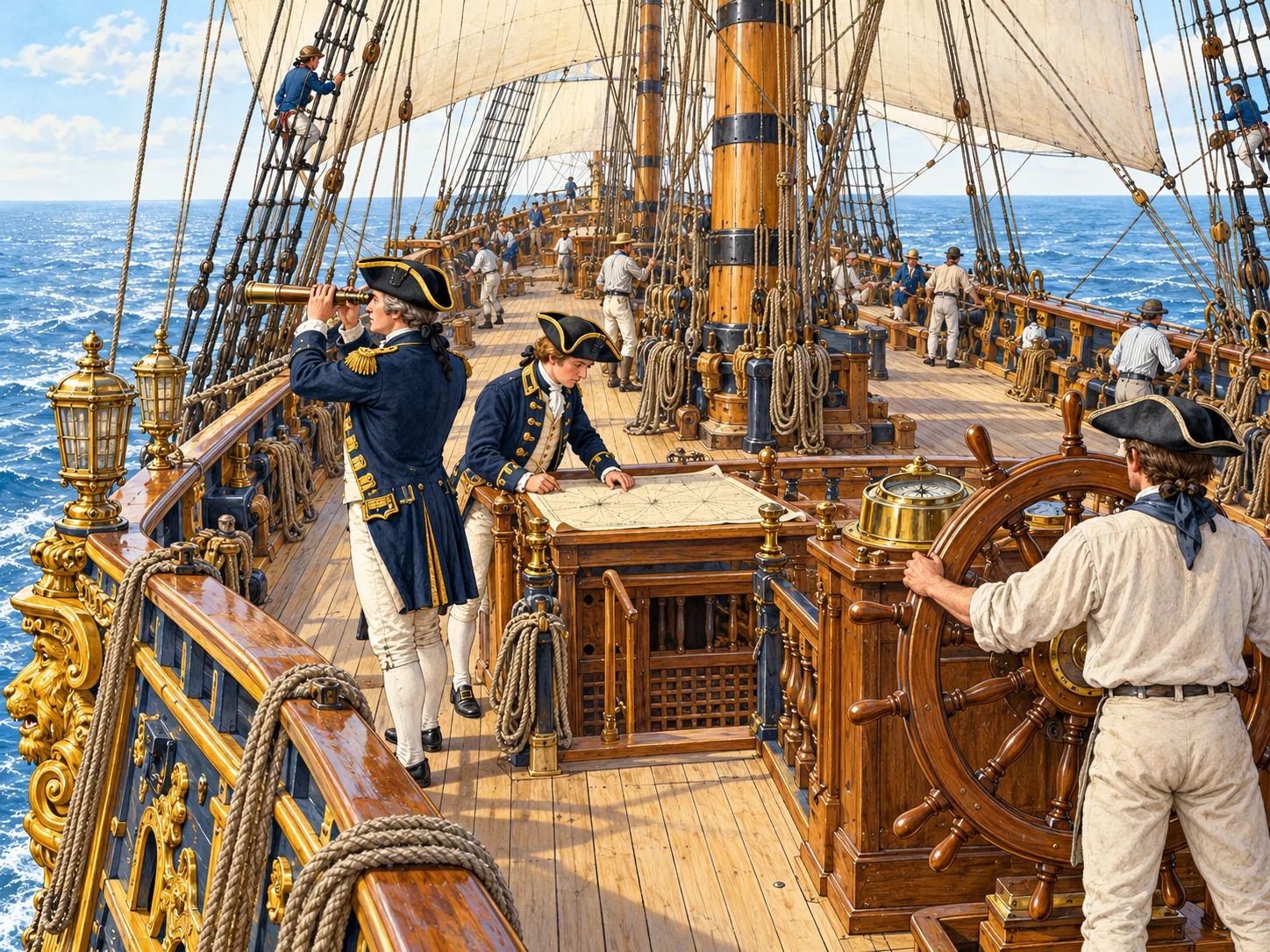
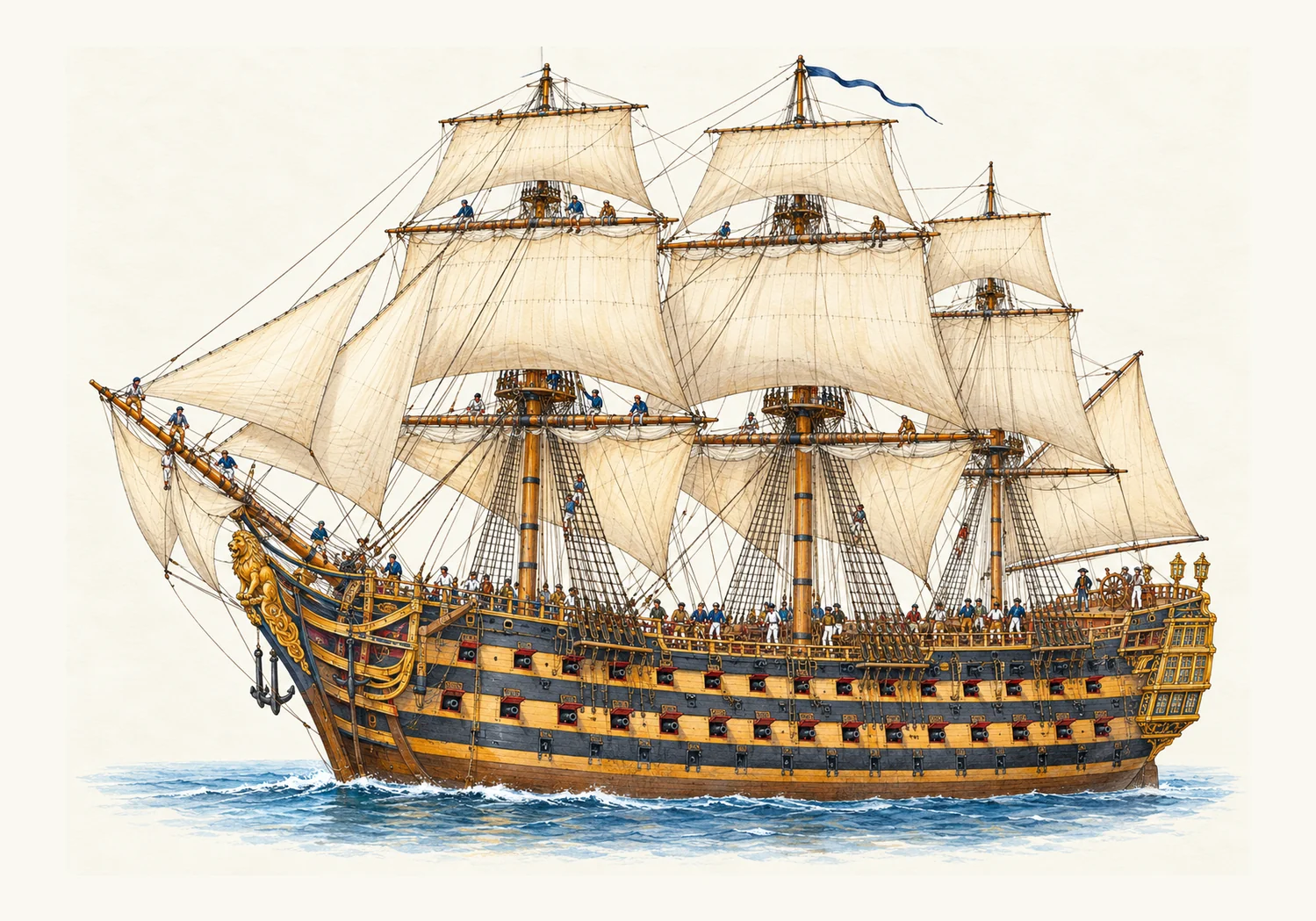
The sails are big sheets of strong canvas. When the wind fills them, they push the whole ship through the water.
Fun fact Sailors furled, or rolled up, the sails onto the wooden yards when the wind was too strong.
2. Masts and rigging
The three tall masts hold up the sails. Hundreds of ropes, called the rigging, keep the masts standing and move the sails.
Fun fact The masts are named fore, main and mizzen, from the front of the ship to the back.
3. Tops
Halfway up each mast is a wooden platform called a top. Sailors climbed up there to work the sails and keep watch.
Fun fact The barrel-shaped crow's nest came later, in the 1800s. On this ship, lookouts stood on the tops.
4. Figurehead
The figurehead is the carved figure at the front of the ship. This one is a golden lion.
Fun fact Lions were a popular figurehead on British warships of the 1700s.
5. Bowsprit
The bowsprit is the long pole that sticks out from the front of the ship. Ropes and small sails are tied to it.
Fun fact The front of a ship is called the bow, and the back is called the stern.
6. Anchor
The anchor is a huge iron hook on a thick rope cable. Dropped to the sea floor, it stops the ship from drifting away.
Fun fact The anchor cable was made of hemp rope, as thick as a grown-up's leg.
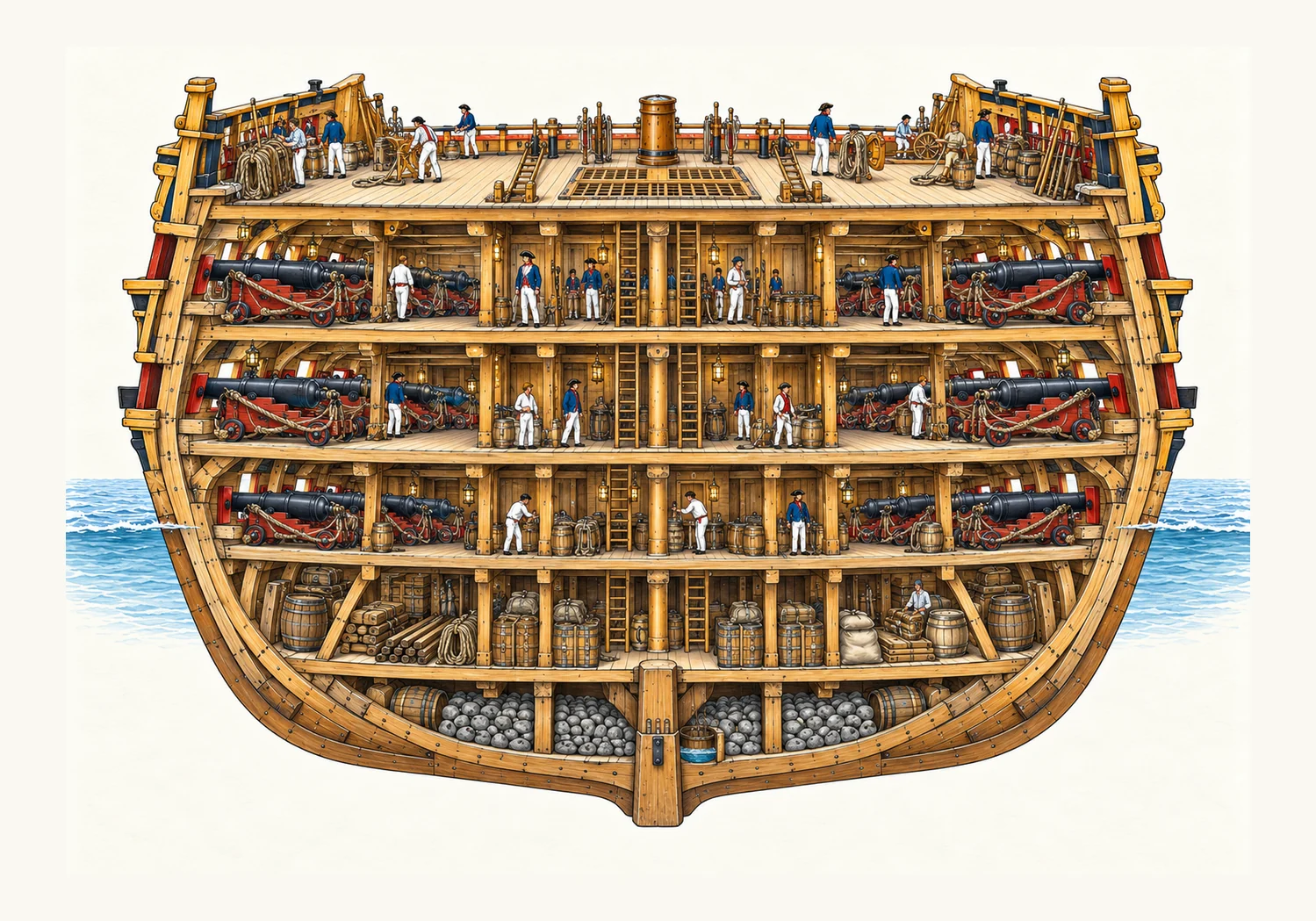
7. Hull
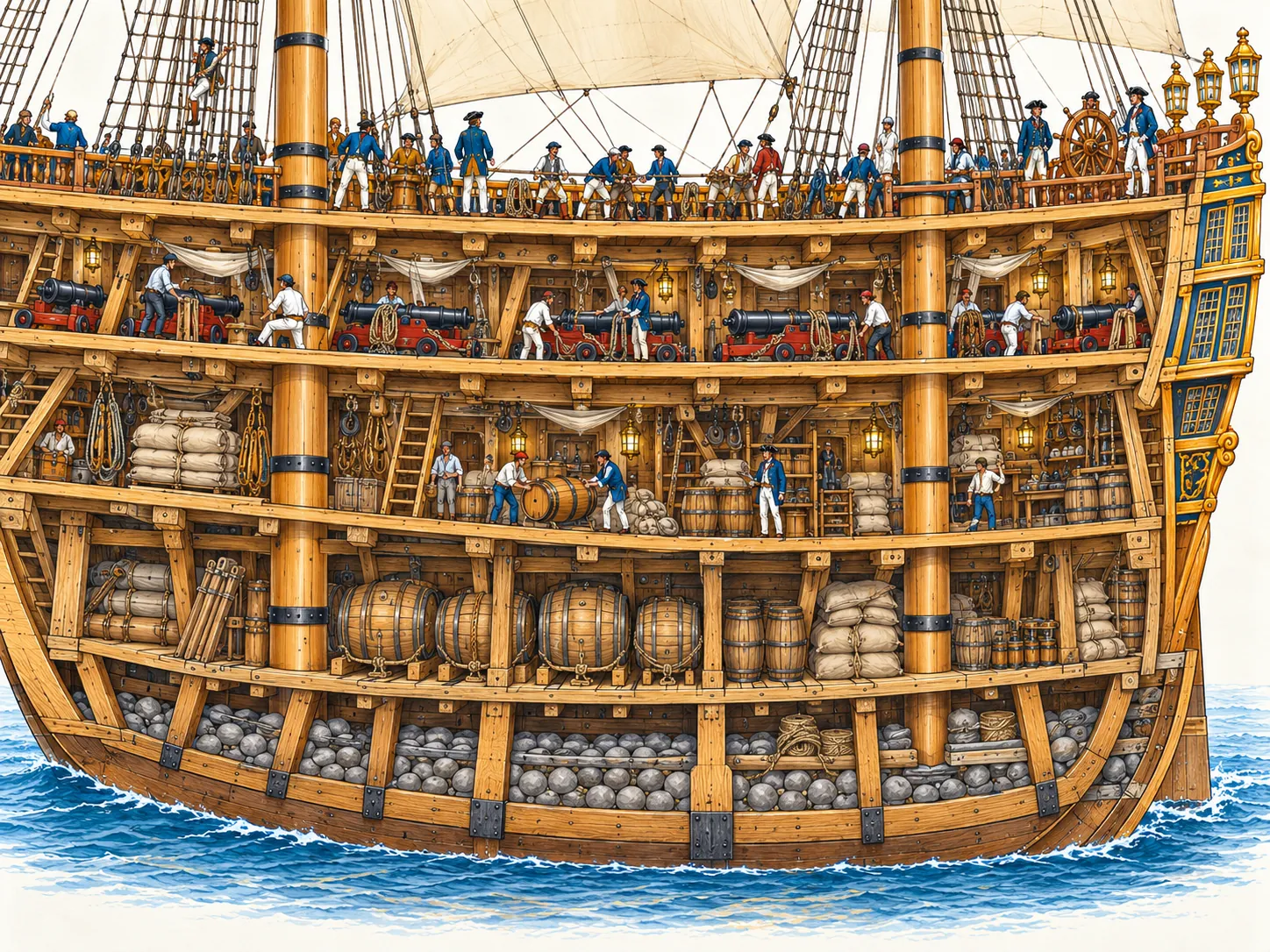
The hull is the body of the ship. It was built from thousands of oak planks fixed onto strong wooden ribs.
Fun fact Building one big ship of the line could use the wood of thousands of oak trees.
8. Gun ports
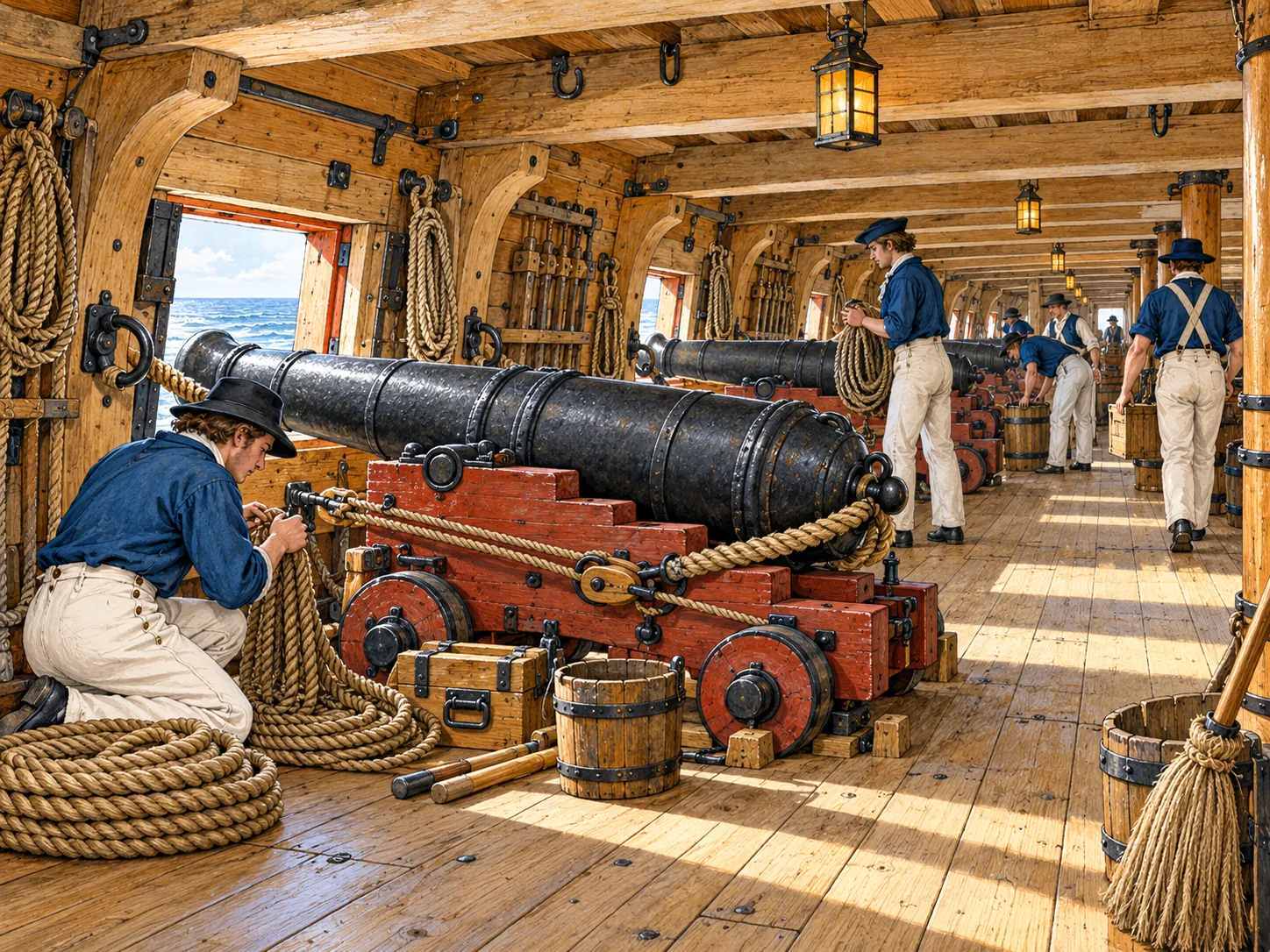
The rows of square doors along the side are gun ports. Each one opens so a cannon can poke out.
Fun fact The yellow and black stripes painted along the gun ports were a common style on British ships of the time.
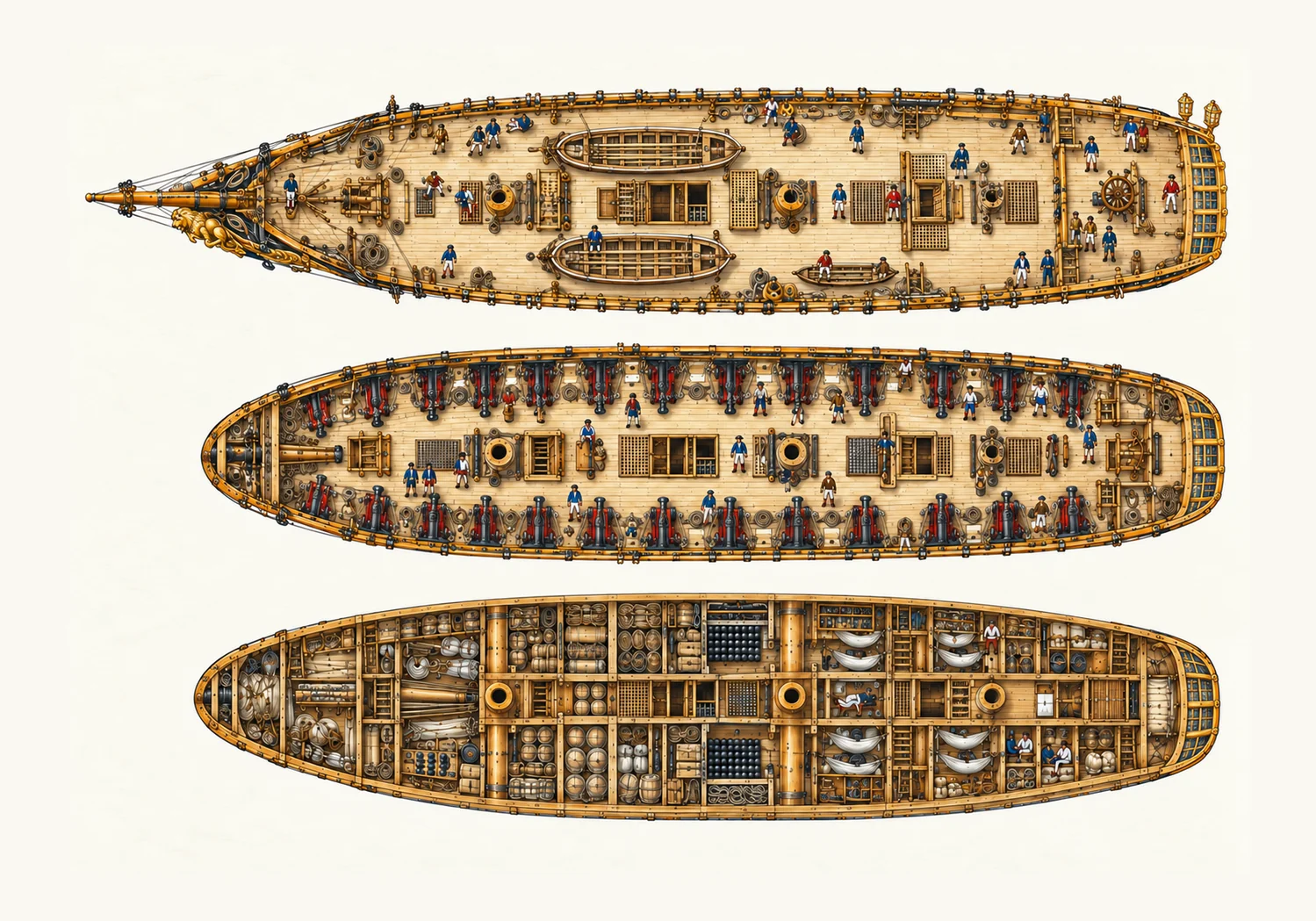
9. Ship's boat
The ship carried smaller boats on deck. Sailors used them to row to shore or to carry things to other ships.
Fun fact The boats were lifted over the side with ropes and pulleys, like a crane.
10. Stern
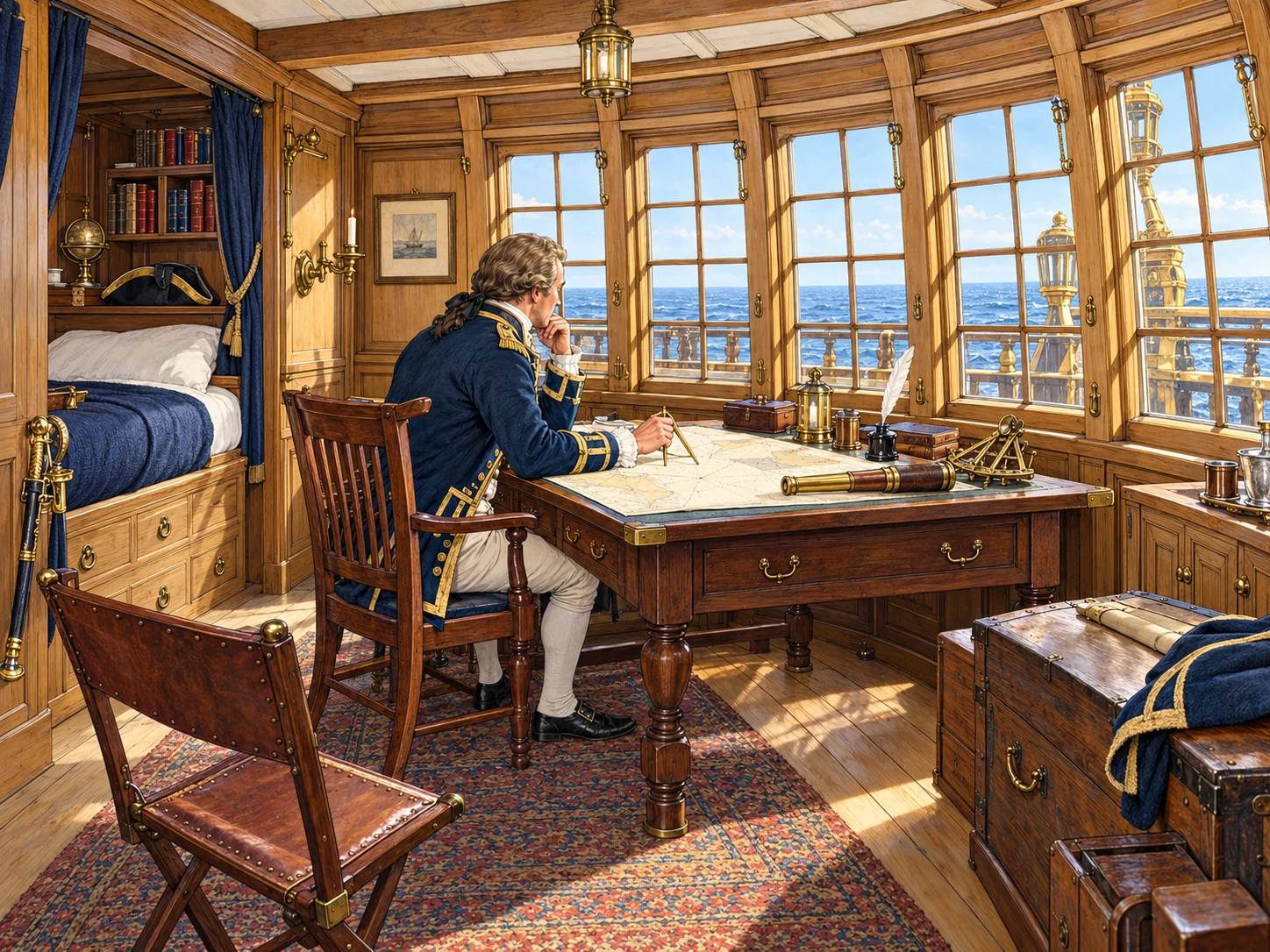
The stern is the back of the ship. Its rows of windows let light into the captain's and officers' cabins.
Fun fact The rudder, which steers the ship, hangs under the stern.
11. Pennant
The long, thin flag at the top of the mainmast is a pennant. It showed the ship was in service with the navy.
Fun fact Some navy pennants were longer than the ship was wide.
12. Port and starboard
See the ship from above to learn the names of its sides: bow, stern, port and starboard.
Fun fact Sailors use these names because left and right change when you turn around, but port and starboard never do.